
A Guide to the Tree Farm Neighborhood in Northwest Bend
Bend, Oregon › NW Bend › Tree Farm
Tree Farm is a small, low-density neighborhood on the far NW edge of the Bend area, built on 533 acres but holding only 50 two-acre homesites, with more than 400 acres kept permanently as open space along Shevlin Park. If you want privacy, a two-acre lot, and Shevlin Park at your back fence instead of a neighbor, this is one of the only places in the Bend area built specifically for that. Homes here originally sold between roughly $370,000 and $907,000 when Brooks Resources released the lots in 2016, and the neighborhood sits about 3.5 miles from downtown Bend.
Tree Farm isn’t split into phases or sub-neighborhoods. It’s one cluster of custom homes on private roads, developed by Brooks Resources, the same developer behind Discovery West and NorthWest Crossing, in partnership with the Miller family who owned the land for six decades before developing it.
Where it sits on Bend’s NW edge
Finding Tree Farm on the map.
The map below outlines Tree Farm’s boundary off Skyliners Road. Shevlin Park and US Forest Service land run along the western and northern edge of the property, NorthWest Crossing sits a couple miles east, and Discovery West is a short drive south. Use the map to orient yourself, then explore the sections below.
Tree Farm
NW Crossing
Discovery West
Tree Farm boundary — Deschutes County public records, approximate. Tap to explore.
Character and identity
What Tree Farm is
actually like to live in.
You won’t find sidewalks, streetlights, or a village core here. Tree Farm is fifty homes clustered on private roads inside a 533-acre property, with the rest left as sagebrush, ponderosa pine, and open meadow. Depending on which lot you’re on, you’ll get a clear mountain view, a fully forested feel, or both. The homes range from mid-century to craftsman to mountain lodge in style, since Brooks Resources and the Miller family set out to keep the same variety you’d see in older Bend neighborhoods, not one repeated floor plan.
The Miller family owned this land as a working tree farm for six decades before partnering with Brooks Resources and West Bend Property Company in 2014. Homesite sales opened in October 2016 to a list of over 1,100 interested buyers, and the last of the 50 lots sold by October 2017. Building has continued steadily since on an individual, custom basis, since every home goes through a design review process rather than being built from a builder’s standard plan.
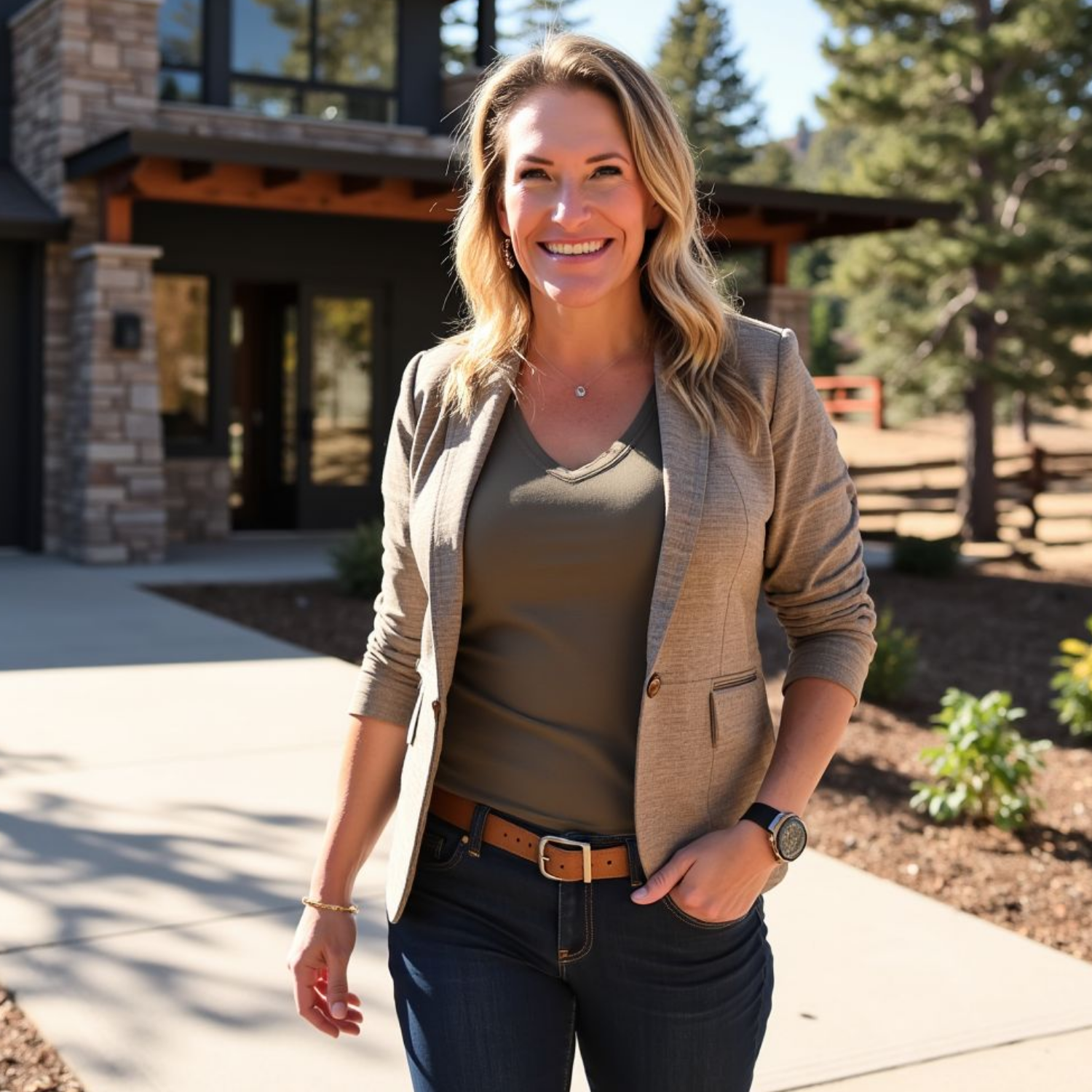
“What buyers don’t always expect about Tree Farm is how much the design review process actually shows up in the finished home. Every house here went through the same guideline review before a shovel hit the ground, and having grown up around my dad’s construction sites, I can tell walking through one of these which decisions were driven by that process versus a standard spec build. It’s a different level of intention.”
Lots run about two acres each, grouped in a cluster pattern rather than spread evenly across the full 533 acres, which is what let Brooks Resources and the Millers preserve more than 400 acres as permanent open space. Setbacks are generous, so even with a neighbor two acres away, tree cover usually means you don’t see their house from yours.
What holds Tree Farm together as a place, more than any clubhouse or plaza, is Shevlin Park itself. The neighborhood was built with direct, informal access to Shevlin Park‘s upper trail network, and 328 acres of the original Tree Farm property were later donated to Bend Park & Recreation District to expand the park permanently.
Outdoors
Trails, parks, and
what’s right outside the door.
Tree Farm borders Shevlin Park directly, which is a different relationship than most Bend neighborhoods have with a park. There’s no drive or even a real walk involved for most lots. That access shapes daily life here: a trail run before work, an evening walk along Tumalo Creek, or kids exploring the woods without ever crossing a street.
Deschutes National Forest land — Adjoins the property on additional sides, extending the sense of open space well beyond the park boundary itself.
Skyliners Road corridor — The road in and out also connects toward Tumalo Falls and the Cascade Lakes recreation area for anyone headed further west.
Because the access is direct rather than a drive to a trailhead parking lot, Tree Farm sees far less trail traffic congestion at its own edge than the main Shevlin Park entrance does on summer weekends.
Day-to-day life
Groceries, coffee, and
where people actually go.
There’s no commercial corner in Tree Farm itself, so daily errands mean a short drive. Most residents head toward NorthWest Crossing’s village core, about 2.5 miles away, for groceries, coffee, and dinner rather than driving all the way into downtown.
McKay Cottage — Scratch-made breakfast in a 1916 cottage past Awbrey Butte.
NW Crossing Farmers Market — Saturday market in the NW Crossing village core during the summer season.
Tumalo Falls — A 97-foot waterfall about 30 minutes further west, with an easy walk to the viewpoint.
You can handle most weekly errands without leaving the west side, but Tree Farm itself stays quiet. It’s set up so daily convenience lives a short drive away in NW Crossing, while the neighborhood itself stays free of any commercial traffic.
Development history
Tree Farm’s history
and how it was built.
Bill Miller of Miller Lumber bought this property in 1955 from a sheep rancher who had owned it since the 1920s. It stayed a working tree farm, logged as recently as the 1990s. When the Miller family was ready to develop it, they partnered with Brooks Resources and West Bend Property Company, the same team behind NorthWest Crossing, and land use planning began in 2014.
The approval process wasn’t without friction. Central Oregon LandWatch raised concerns during the county land use review about wildfire risk and wildlife habitat on the westside property. The Tree Farm’s developers worked with the group directly, and the appeal was withdrawn in February 2016. Out of that process came a plan that built in National Fire Protection Association wildfire guidelines from the start, making Tree Farm one of the first Firewise-designed communities of its size in Deschutes County.
The 50 homesites sold out within about a year, between October 2016 and October 2017. Building has continued gradually since on an individual basis. In August 2017, 328 acres of the property’s permanent open space were transferred to Bend Park & Recreation District, expanding Shevlin Park using a mix of federal grant funding and a donation from Tree Farm LLC. Today the neighborhood is effectively built out, with only occasional new construction as the last few homesites are completed or older homes are updated.
Architecturally, there’s no single dominant style. Homes range from mid-century to craftsman to mountain lodge, tied together by a design review process rather than a repeated floor plan. Two-acre lots and generous setbacks mean the variation reads as intentional rather than mismatched.
The homes
The homes
in Tree Farm.
When Brooks Resources released the original 50 homesites in 2016 and 2017, they sold for between about $370,000 and $907,000, before any homes were built. Because almost no one sells here, later resale data is thin. One tracked resale in 2020 closed around $591,000, but that’s a single data point from years ago, not a current market range. Values have risen substantially since, in line with the rest of NW Bend, but an honest current price range isn’t something the public record supports for a neighborhood this size and this quiet. Contact Tiffany directly for what’s actually happened recently.
Lot sizes run about two acres each, clustered rather than spread evenly across the full 533-acre property, which is what preserved the surrounding open space. Home sizes and floor plans vary individually since every house goes through design review rather than coming from a standard builder plan. Tree Farm’s HOA maintains design guidelines, CC&Rs, and the private road system; confirm current dues and requirements on any specific listing before assuming what applies. Most of the neighborhood is built out at this point, with only occasional individual homes still in progress.
“The thing I tell buyers about Tree Farm before anything else is that there is basically no inventory to react to. With fifty lots total and almost no turnover since it sold out, you can’t wait for something to hit the market and then start thinking about it. If you’re serious, I need to already be watching for you.”
Schools
Where your kids
will go to school.
School assignments in Bend are set by home address and can shift when the district redraws boundaries. Confirm the current school for any specific address before relying on it — the Bend-La Pine Schools locator is the authoritative source.
Central Oregon Community College and OSU-Cascades are both within the Bend area and serve students from all neighborhoods. Distance varies by area — confirm commute before assuming proximity from Tree Farm’s location on the far NW edge.
Tree Farm Homes for Sale
With only 50 lots total and almost no turnover, Tree Farm rarely has active listings at any given moment. When something does come up, it moves fast among buyers who are already watching. The most reliable way to see what’s currently available is directly on the Tree Farm neighborhood page, where listings pull live from the MLS.
Advantages and Considerations
What to know before
buying in Tree Farm.
Every neighborhood has genuine strengths and honest tradeoffs. These are the things that matter most to buyers who end up here, and the ones worth knowing before you commit.
- Inventory is thin by design. With only 50 lots and almost no resale activity, you can go a long time without seeing a single active listing here.
- You are outside Bend’s incorporated city limits, in unincorporated Deschutes County, which can affect things like emergency response boundaries and certain permitting. Confirm what applies to a specific address.
- Private roads mean maintenance runs through the HOA rather than the city. Confirm current dues and what they cover on any specific listing.
- Direct Shevlin Park access is the defining feature, but it also means you’re at the edge of the wildland-urban interface. Tree Farm was built with wildfire mitigation guidelines from the ground up, which is worth understanding rather than assuming.
- It sits outside any walkable village core, so daily errands generally mean a short drive to NW Crossing or further into town.
- Every home goes through an architectural design review process, which shapes build quality and consistency but also means you should expect that process on any future changes you make.
- Because turnover is so low, pricing data is genuinely thin. Work with someone willing to track comparable sales from nearby NW Bend communities rather than relying on Tree Farm alone.
How it compares
Tree Farm vs NW Crossing and Discovery West.
These three neighborhoods all sit in NW Bend within a few miles of each other, and all three were built at least in part by Brooks Resources. Here is how they differ. Which one fits depends on what matters most to you.
Tree Farm
NW Crossing
Discovery West
Boundaries sourced from Deschutes County public records and developer materials. Approximate.
Two-acre lots, no village core
Walkable village, hundreds of homes
Active new construction, growing town center
If daily walkability matters more to you than acreage, NW Crossing is honestly the better fit. If you want new construction with builder choice and a growing town center, Discovery West makes more sense than waiting on Tree Farm’s nearly nonexistent resale market.
My honest take
Is Tree Farm
right for you?
I’ll be straight with you: Tree Farm is one of the hardest neighborhoods in Bend to actually buy into, simply because there’s so little of it. Fifty lots, almost no turnover, and a location that most people driving through Bend never even see. But for the right buyer, that’s exactly the point. It’s the closest thing the Bend area has to true acreage living with Shevlin Park in your backyard, and it was built with more intention about wildfire safety and design consistency than almost anywhere else I work.
Growing up around my dad’s construction sites, I notice things in a neighborhood like this that aren’t obvious from a listing photo. The way lots were clustered instead of spread evenly, the design review guidelines that shaped every home here, the fact that Firewise planning came before the first road was even graded. If you’re weighing Tree Farm against NW Crossing or Discovery West, I’d rather walk you through what that actually means for daily life than sell you on a single feature.
If you’re serious about Tree Farm, don’t wait for a listing to appear. Reach out to me directly and I’ll help you figure out whether it’s genuinely the right fit, and if it is, I’ll be watching for you.
Tree Farm FAQ
Questions people ask
about Tree Farm.
Guide last updated September 2026 by Tiffany Vasquez, Life in Bend. Neighborhood facts sourced from Brooks Resources, Bend Park & Recreation District, Bend-La Pine Schools, and Deschutes County public records.
22 years in real estate · 250+ homes sold
Top 1% NW Bend, per COAR MLS
541-728-3668 · lifeinbend.com
Tiffany is your guide, contact, and advocate from the first tour through closing, and her support staff makes sure you get the concierge service you deserve. With 22 years in real estate and a background raised by a father who built and developed custom luxury homes, she walks every Tree Farm home with a builder’s eye.
Explore nearby